Atlassian Team '26: What We Expect, Think, and Hope Ahead
From the perspective of an Atlassian Marketplace partner building integrations every day. What we're watching for at Team '26: AI in the workflow, the System of Work, enterprise needs, and where partners still matter.

From the perspective of an Atlassian Marketplace partner building integrations every day.
Why Team ‘26 actually matters
Every year, Atlassian Team is where things stop being ideas and start becoming direction.
For customers, it’s about features. For partners like us at Numeric Oasis, it’s about signals.
- What is Atlassian really investing in?
- What problems are they trying to solve?
- And just as important, what gaps are they leaving for companies like ours to fill?
Team ‘26 feels like one of those turning points. AI is no longer optional, enterprise customers are driving decisions, and integrations are becoming the real battleground.
So here’s our honest take.
What we expect to see
AI becoming part of the workflow, not just a feature
We’ve already seen Atlassian push hard on AI, but now it needs to feel useful in day-to-day work. What we expect is less “look what AI can do” and more “this saves you time right now”.
Things like:
- AI helping route tickets in Jira Service Management without complex rules.
- Smarter suggestions in Jira based on real context, not just text.
- Confluence turning into something closer to a knowledge engine than a document tool.
If this lands well, it will reduce a lot of the manual configuration we deal with today.
The “System of Work” becoming more concrete
Atlassian has been talking about this for a while. The idea is strong, but it still feels a bit abstract in practice. We expect to see tighter connections between products:
- Jira issues flowing naturally into Confluence content.
- Loom, Jira, and JSM feeling like one experience instead of separate tools.
- Better visibility across teams without needing custom dashboards everywhere.
Right now, we spend a lot of time building those connections manually for customers. It would be great to see more of that handled natively.
More focus on enterprise needs
This is already happening, and it’s not slowing down. We expect improvements in:
- Governance and access control.
- Data residency and compliance.
- Scalable automation and reporting.
From a consulting perspective, this is good and bad. It solves real problems, but it also increases complexity. And complexity is exactly where partners get pulled in.
What we believe will happen (based on what we’re seeing with customers)
Integrations will matter more than features
Most of our customers don’t struggle because Jira is missing something. They struggle because Jira is not fully connected to everything else they use.
Slack, Miro, CI/CD tools, internal systems, data platforms… that’s where things break.
We believe Team ‘26 will push integrations further, but not far enough to cover real-world complexity. That’s where custom integrations, apps, and platforms like what we build at Numeric Oasis will keep playing a big role.
Automation will start replacing complexity
A lot of Jira environments today are overbuilt. Too many workflows, too many conditions, too many edge cases. With better automation and AI, we expect a shift:
- Less rigid workflows.
- More dynamic behavior based on context.
- Fewer manual rules trying to handle every scenario.
This is something we’re already starting to design for in new implementations.
The Marketplace will need to evolve
This is a big one for vendors. The Atlassian platform has moved forward fast, but the Marketplace experience hasn’t kept the same pace. We believe changes are coming. Possibly around:
- How apps integrate more deeply into the platform.
- How customers discover and trust apps.
- How vendors build AI-powered features.
For companies like ours, this can either unlock a lot of value or create new constraints. Probably both.
What we hope to see
A stronger developer platform
Forge has come a long way, but it still has limitations that matter when you’re building real products. What we hope for:
- Better support across all Atlassian products, including Bitbucket.
- Fewer restrictions on performance and architecture.
- More flexibility in how apps are built and deployed.
If Atlassian improves this, the ecosystem will grow much faster.
Real investment in integrations as a first-class concept
Not just APIs, but actual integration thinking. Things like:
- Event-driven workflows across products.
- Easier ways to connect external systems.
- Native orchestration between tools.
Right now, we spend a lot of time building these layers ourselves. It would be great to see Atlassian meet us halfway.
Clearer communication with partners
Partners are building a lot of what customers rely on. We don’t just need new features, we need clarity:
- Where Atlassian is going.
- What they plan to build vs what they expect partners to build.
- How we can align early instead of reacting later.
This makes a big difference in what we choose to invest in.
Final thoughts
From where we sit, Atlassian is becoming less of a toolset and more of a platform that shapes how companies operate.
Team ‘26 will likely confirm that direction.
AI will be everywhere. Integrations will define real value. And complexity will move from users to systems.
At Numeric Oasis, this is exactly the space we care about.
We build where things don’t connect yet. We simplify what gets too complex. And we try to stay one step ahead of where the platform is going.
Team ‘26 will give us a clearer picture of that future. And we’re ready for it.
We build Atlassian Marketplace apps.
Forge apps for Jira and Confluence Cloud that run inside your own Atlassian environment. Your data stays where it already is, and your security review covers one platform you have already approved.
Related reading
Jira's 700 custom field limit is not a site-wide cap
Jira Cloud caps custom fields at 700 per space, not across your whole site, and one field can count toward several spaces at once. What Atlassian's guardrails actually say, what happens when a space reaches the line, and the order to audit in.
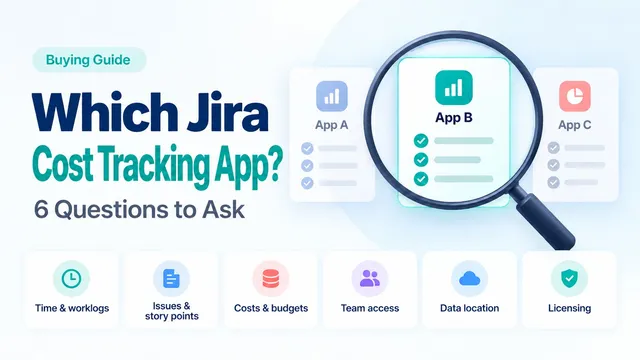
How to choose a cost tracking app for Jira
A buying guide written by the team behind OnBudget. Six criteria phrased as questions a buyer would ask, a table comparing five approaches rather than five products, and a plain account of where OnBudget fits and where it does not.
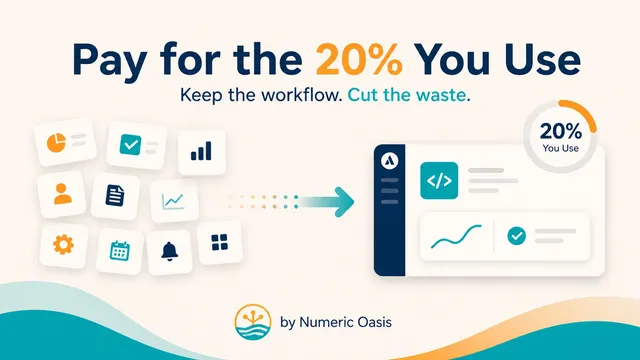
Pay for the 20% You Use: Shrinking Your Atlassian App Footprint Without Losing the Workflow
Most Atlassian Marketplace bills pay for features nobody uses. An honest usage audit and a focused custom Forge app turn pay-per-seat-forever into pay-once-you-own-it, with a better fit for your team.